Beef Cuts Chart: A Comprehensive Guide (2026)
Beef cut posters, and specifically a beef cuts chart PDF, are incredibly effective learning tools, detailing cuts, origins, and optimal cooking methods for enthusiasts.
These charts assist butchers with sub-primal cut identification, cooking recommendations, and lean designations, while foodservice professionals utilize IMPS/NAMP numbers.
Understanding beef cuts begins with recognizing the incredible diversity available to consumers and culinary professionals alike. A comprehensive beef cuts chart PDF serves as an invaluable resource, visually mapping the various sections of the animal and their corresponding cuts.
These charts aren’t merely diagrams; they are gateways to unlocking the full potential of each cut, guiding users toward appropriate cooking methods. From tender, quick-cooking options like the filet mignon to tougher, slow-braised cuts like brisket, a chart clarifies the best approach for optimal flavor and texture.
Beef cut posters, often available in PDF format, are essential for education, whether for home cooks, butchers, or foodservice staff. They demystify the process, promoting informed purchasing decisions and culinary creativity. The beef cuts chart is a cornerstone of beef appreciation.
Understanding Beef Primal Cuts
A beef cuts chart PDF fundamentally illustrates the eight primal cuts – large sections of the carcass from which all individual cuts are derived. These primals – Chuck, Rib, Loin, Round, Flank, Brisket, Plate, and Short Plate – represent the foundational understanding of beef anatomy.
Each primal possesses distinct characteristics influencing tenderness and flavor. For example, the Rib primal is renowned for its marbling and tenderness, yielding cuts like the Ribeye, while the Chuck primal, a more heavily worked muscle, benefits from slow-cooking methods.
Beef cut posters visually delineate these primals, showcasing their location on the animal. Understanding these foundational cuts, as presented in a detailed beef cuts chart, is crucial for butchers and cooks to select the appropriate cut for a desired cooking method and final dish.
The Role of a Beef Cuts Chart PDF
A comprehensive beef cuts chart PDF serves as an invaluable resource for anyone involved with beef, from consumers to professionals. These charts are the “most effective tools” for learning about various cuts, their origins on the carcass, and the best cooking methods, as highlighted by industry resources.
For butchers, a beef cuts chart details sub-primal cuts, recommended cooking methods, and lean designations, aiding in accurate cutting and customer guidance. Foodservice professionals rely on these charts for IMPS/NAMP numbers, order specifications, and cut trees, streamlining ordering and preparation.
Ultimately, a well-designed beef cuts chart PDF promotes informed decision-making, ensuring optimal beef utilization and culinary results, bridging the gap between the farm and the table.
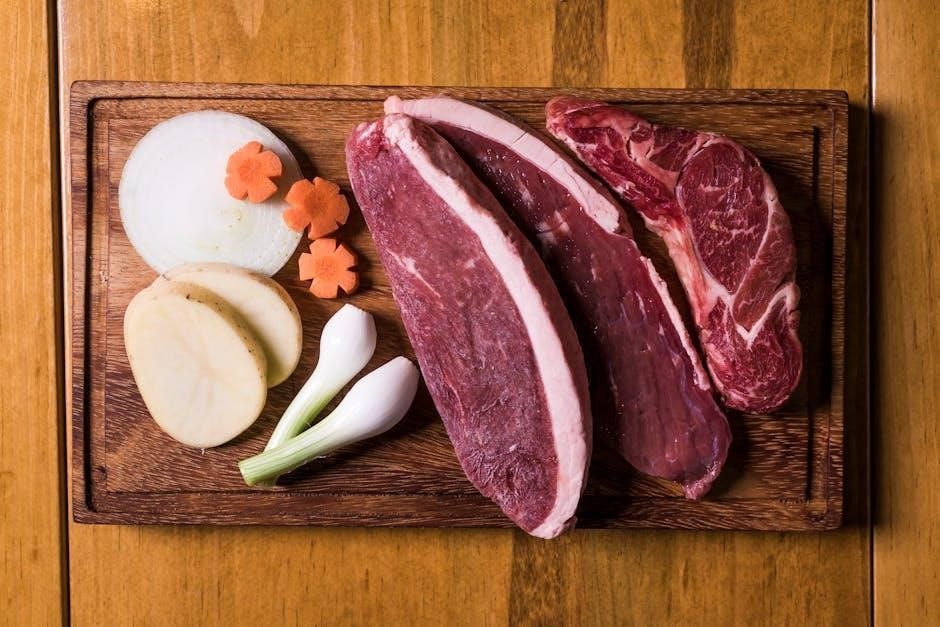
Major Beef Primal Cuts & Their Locations
Beef cuts charts visually demonstrate the eight primal cuts – chuck, rib, loin, round, flank, brisket, plate, and short plate – and their positions.
Chuck Primal Cut
The chuck primal cut, as detailed in comprehensive beef cuts charts, originates from the shoulder area of the cattle, encompassing bones and a significant amount of connective tissue;
These charts illustrate that chuck is known for its robust flavor, making it ideal for braising, stewing, and slow-cooking methods. Cuts derived from the chuck, like chuck roast and blade steak, benefit from extended cooking times to tenderize the muscle fibers.
Beef cuts chart PDFs for butchers often highlight sub-primal cuts within the chuck, specifying recommended cooking techniques and lean designations. Foodservice charts will also include relevant IMPS/NAMP numbers for precise ordering and identification of these versatile cuts.
Understanding the chuck’s location and characteristics, as presented in these charts, is crucial for maximizing flavor and tenderness in various culinary applications.
Rib Primal Cut
The rib primal cut, clearly depicted in detailed beef cuts chart PDFs, is renowned for its exceptional marbling and tenderness, originating from the upper rib cage of the animal.
These charts showcase that this cut yields premium steaks like the Ribeye, known for its rich flavor and juicy texture. Charts for butchers emphasize the varying degrees of marbling and fat content within different rib cuts, influencing their suitability for grilling, broiling, or roasting.
Foodservice beef cuts charts will list specific IMPS/NAMP numbers for ribeye, rib roast, and back ribs, aiding in accurate ordering and portion control. The visual guides demonstrate the location of these cuts on the carcass.
Understanding the rib primal’s characteristics, as presented in these charts, allows for optimal preparation and enjoyment of this highly sought-after cut.
Loin Primal Cut
The loin primal cut, comprehensively illustrated in beef cuts chart PDFs, is prized for its tenderness, stemming from muscles that perform minimal work. These charts visually represent its location along the back of the animal, between the rib and round.
Key cuts derived from the loin include the Tenderloin (Filet Mignon) and Strip Steak (New York Strip), both celebrated for their delicate texture and flavor. Butcher-focused charts detail sub-primal breakdowns, highlighting muscle separation and fat distribution.
Foodservice beef cuts charts provide IMPS/NAMP numbers for precise ordering, alongside specifications for portion sizes and trim levels. These charts are essential for consistent product quality.
A clear understanding of the loin primal, facilitated by these visual guides, ensures proper handling and preparation of these premium cuts.
Round Primal Cut
Beef cuts chart PDFs clearly depict the Round Primal Cut, located at the rear leg of the animal, and known for being leaner than other primals due to significant muscle use. These charts illustrate its position and the various cuts derived from it.
Common cuts from the round include Sirloin Steak (sometimes categorized as loin/round), Top Round, Bottom Round, and Eye of Round. Butcher charts detail how to fabricate these cuts, emphasizing proper trimming and portioning for optimal tenderness.
Foodservice charts include IMPS/NAMP numbers for accurate ordering and specifications for applications like roasts, steaks, and ground beef. Lean designations are prominently featured.
Understanding the round primal, aided by these visual guides, is crucial for selecting and preparing economical yet flavorful beef options.
Flank Primal Cut
Beef cuts chart PDFs visually represent the Flank Primal Cut, situated below the loin, and recognized for its long, flat muscle fibers. These charts are essential for understanding its location on the carcass and the resulting cuts.
The most popular cut from the flank is Flank Steak, prized for its robust flavor and suitability for marinades. Butcher charts detail fabrication techniques, emphasizing the importance of slicing against the grain for tenderness.
Foodservice charts provide IMPS/NAMP numbers for precise ordering and specifications, alongside details on common applications like fajitas, stir-fries, and London broil. Lean designations are clearly indicated.
These visual guides empower both butchers and cooks to maximize the potential of this flavorful, yet potentially tough, cut of beef.
Brisket Primal Cut
Beef cuts chart PDFs clearly illustrate the Brisket Primal Cut, located on the breast of the cattle. These charts are invaluable for identifying this tough, yet flavorful cut and understanding its composition.
The brisket is divided into the Flat and the Point, both detailed on butcher charts. Brisket itself is renowned for slow-cooking methods like smoking and braising, transforming it into tender, succulent meat.
Foodservice charts specify IMPS/NAMP numbers for accurate ordering, alongside information on applications like corned beef, pastrami, and barbecue. Charts also highlight lean designations.
These visual guides assist professionals in maximizing the potential of the brisket, showcasing its versatility and providing guidance on proper preparation techniques for optimal results.
Plate Primal Cut
Beef cuts chart PDFs meticulously detail the Plate Primal Cut, situated below the rib and chuck, offering a visual guide to this economical section of beef. These charts are essential for understanding its unique characteristics.
The plate is known for its rich marbling and is typically used for ground beef, short ribs, and skirt steak. Butcher charts clearly delineate these sub-primal cuts, aiding in accurate identification and portioning.
Foodservice charts provide IMPS/NAMP numbers for precise ordering, alongside details on common applications like Philly cheesesteaks (using skirt steak). Lean designations are also prominently featured.
These visual resources empower butchers and chefs to effectively utilize the plate, maximizing yield and delivering flavorful, cost-effective dishes to consumers, guided by the chart’s information.
Short Plate Primal Cut
Beef cuts chart PDFs provide detailed illustrations of the Short Plate Primal Cut, located below the rib and chuck, and above the flank. These charts are invaluable for identifying its specific sub-primal cuts and understanding their culinary applications.
The short plate is renowned for its heavily marbled meat, making it ideal for flavorful cuts like the flat iron steak and skirt steak. Butcher charts highlight these, alongside recommended cooking methods for optimal tenderness.
Foodservice professionals rely on these charts for IMPS/NAMP numbers, ensuring accurate ordering and consistent quality. Cut trees visually demonstrate fabrication possibilities.
These resources empower chefs to maximize yield and create diverse menu options, from fajitas (skirt steak) to premium steak dishes (flat iron), all guided by the comprehensive information within the chart.
Popular Beef Cuts & Cooking Methods
Beef cuts chart PDFs expertly pair popular cuts – tenderloin, strip steak, ribeye, sirloin, chuck roast, brisket, and flank steak – with their ideal cooking techniques.
Tenderloin (Filet Mignon) ― Loin Cut
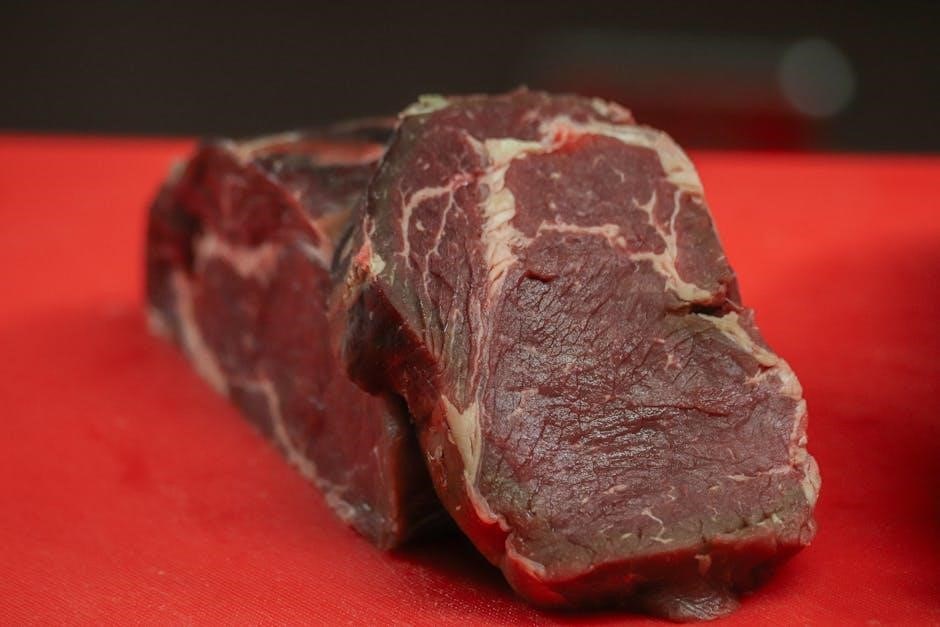
Tenderloin, famously known as Filet Mignon, originates from the loin primal cut and is widely regarded as one of the most tender and prized beef cuts available. A comprehensive beef cuts chart PDF clearly illustrates its location within the carcass, highlighting its position as a muscle that performs minimal work, contributing to its exceptional tenderness.
These charts typically recommend cooking methods that preserve this delicate texture, such as broiling, grilling, or pan-searing to medium-rare or medium doneness. Overcooking can diminish its inherent qualities. The PDF will often detail appropriate internal temperatures for optimal results.
Butcher charts will also specify fabrication techniques for maximizing yield from the tenderloin, including trimming and portioning. Foodservice charts will include IMPS/NAMP numbers for precise ordering and specification, ensuring consistency in quality and cut size.
Strip Steak (New York Strip) ― Loin Cut
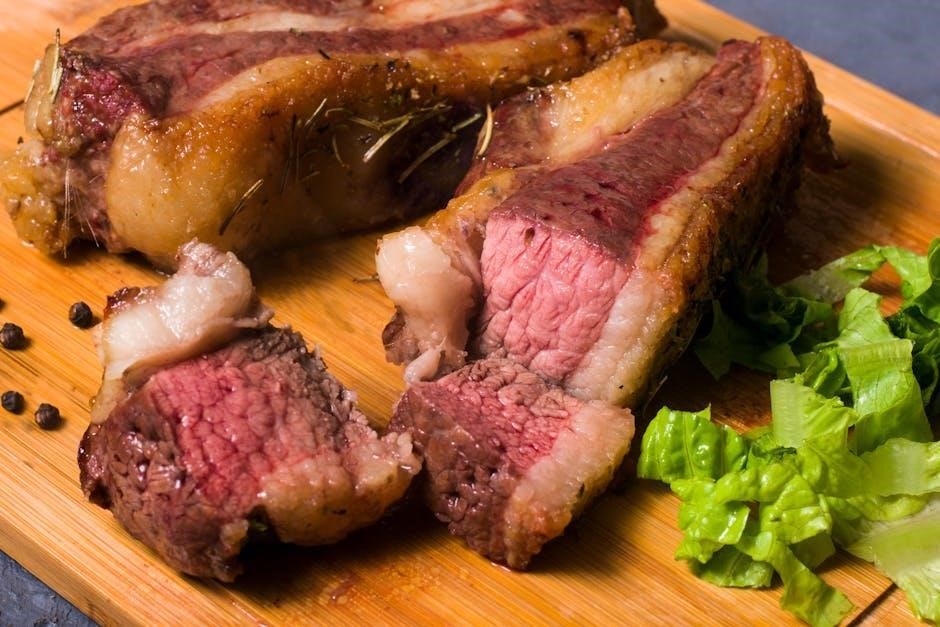
The Strip Steak, also known as the New York Strip, is a flavorful and tender cut derived from the loin primal. A detailed beef cuts chart PDF visually demonstrates its location, typically cut from the short loin. It’s characterized by a firm texture and a balanced marbling, offering a robust beef flavor.
These charts commonly recommend cooking methods like grilling, broiling, or pan-searing, often to medium-rare or medium to enhance its flavor and tenderness. The PDF will often include suggested resting times to allow juices to redistribute.
Butcher charts highlight proper trimming techniques, while foodservice charts provide IMPS/NAMP numbers for accurate ordering and portion control. These resources ensure consistent quality and facilitate efficient kitchen operations, making the New York Strip a versatile choice.
Ribeye Steak ౼ Rib Cut
The Ribeye Steak, a highly prized cut, originates from the rib primal, as clearly illustrated in a comprehensive beef cuts chart PDF. Known for its rich marbling, it delivers exceptional flavor and juiciness. Charts detail the location within the rib section, often showcasing both bone-in and boneless variations.
Beef cut posters and PDFs typically recommend cooking methods like grilling, pan-searing, or broiling, often aiming for medium-rare to medium doneness to maximize tenderness. The visual guides often include internal temperature recommendations for optimal results.
For butchers, the PDF outlines proper trimming and cutting techniques. Foodservice charts provide IMPS/NAMP numbers for standardized ordering and portioning, ensuring consistency in restaurants and catering. This cut’s popularity makes it a staple in many culinary applications.
Sirloin Steak ౼ Loin/Round Cut
The Sirloin Steak, a versatile cut, is sourced from both the loin and round primals, a detail readily visible on a detailed beef cuts chart PDF. While generally leaner than ribeye, it still offers a robust beef flavor, making it a popular choice for everyday cooking.
Beef cut posters and PDFs suggest various cooking methods, including grilling, broiling, or pan-frying. Marinating is often recommended to enhance tenderness, particularly for cuts from the round. Charts frequently indicate appropriate cooking times based on thickness.
Butchers utilize PDF guides to identify different sirloin sub-cuts and ensure proper trimming. Foodservice professionals rely on IMPS/NAMP numbers for accurate ordering and portion control. This cut’s affordability and flavor profile make it a common menu item.
Chuck Roast ౼ Chuck Cut
The Chuck Roast, originating from the chuck primal, is a flavorful, though often tougher, cut best suited for braising or slow cooking – information clearly displayed on a comprehensive beef cuts chart PDF. These charts highlight the cut’s marbling, contributing to its rich taste when properly prepared.
Beef cut posters emphasize that low and slow methods, like pot roasting, break down the connective tissues, resulting in a tender and succulent roast. PDF guides often include recipe suggestions and estimated cooking times.
For butchers, PDF charts aid in identifying specific chuck sub-cuts and appropriate trimming techniques. Foodservice applications, detailed in charts, include stews, pot pies, and shredded beef dishes. Understanding the cut’s characteristics, as shown on the chart, is crucial for optimal results.
Brisket ― Brisket Cut
The Brisket, sourced from the brisket primal, is a challenging yet rewarding cut, prominently featured on any detailed beef cuts chart PDF. These charts illustrate its significant marbling and the necessity for low and slow cooking methods, like smoking or braising, to achieve tenderness.
Beef cut posters emphasize that brisket requires extended cooking times to break down its tough muscle fibers. PDF guides often detail different brisket sub-cuts – the flat and the point – and their ideal applications.
For foodservice, PDF charts specify IMPS/NAMP numbers for precise ordering and portion control. Common applications, highlighted on the chart, include barbecue, corned beef, and pastrami. Understanding the cut’s structure, as presented in the chart, is vital for consistent quality.
Flank Steak ― Flank Cut
The Flank Steak, originating from the flank primal, is a flavorful, lean cut frequently detailed in a comprehensive beef cuts chart PDF. These charts showcase its long, flat shape and prominent grain, crucial for proper preparation. Beef cut posters recommend marinating to enhance tenderness, followed by quick, high-heat cooking methods like grilling or broiling.
A PDF guide will illustrate the importance of slicing against the grain to maximize tenderness. Foodservice charts utilize IMPS/NAMP numbers for accurate ordering and portioning, often specifying applications like London broil or fajitas.
Understanding the cut’s characteristics, as presented in the beef cuts chart PDF, allows for consistent, high-quality results. Proper cooking and slicing techniques are key to enjoying this versatile cut.
Using a Beef Cuts Chart for Butchers
Beef cuts chart PDFs are essential tools for butchers, aiding in sub-primal cut identification, cooking methods, and understanding lean designations efficiently.
Sub-Primal Cuts Identification
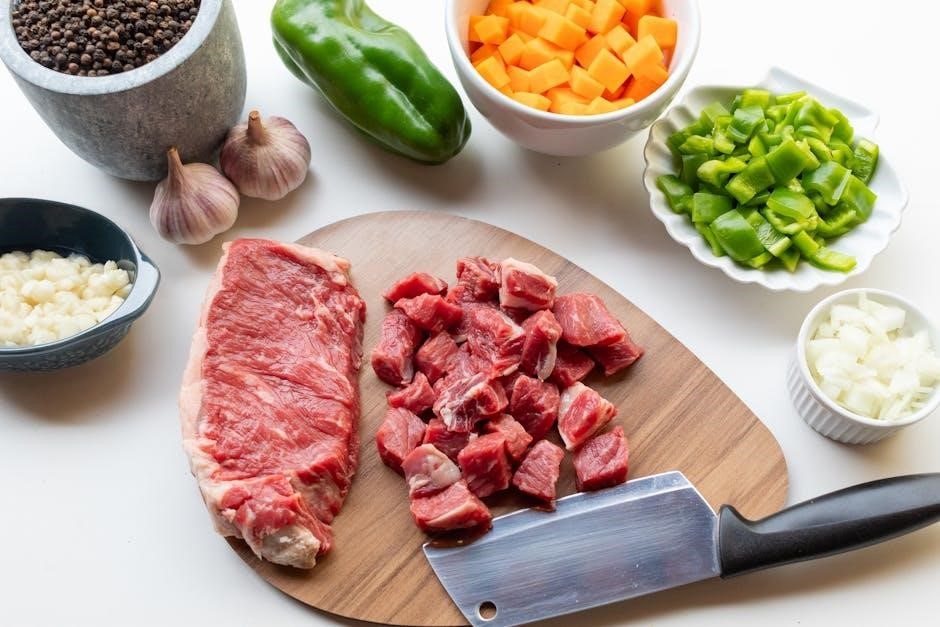
Beef cuts chart PDFs are invaluable resources for butchers needing to accurately identify various sub-primal cuts. These charts visually break down the primal cuts – chuck, rib, loin, round, flank, brisket, plate, and short plate – into their smaller, more manageable components.
Detailed charts clearly delineate each sub-primal, such as the chuck eye roll, ribeye roll, strip loin, top round, bottom round, and more, providing a visual guide to their location on the carcass. This precise identification is crucial for consistent cutting and portioning.
Furthermore, a comprehensive beef cuts chart PDF often includes diagrams illustrating muscle structures and fat marbling, assisting butchers in selecting the best cuts for specific customer requests and cooking applications. Accurate identification ensures proper pricing and inventory management within the butcher shop.
Recommended Cooking Methods on Butcher Charts
A key feature of a useful beef cuts chart PDF for butchers is the inclusion of recommended cooking methods for each cut. These charts don’t just identify what the cut is, but also how to best prepare it for optimal flavor and tenderness.
Charts typically categorize cuts based on suitability for grilling, roasting, braising, stewing, or frying. For example, tender cuts like filet mignon are best suited for quick, high-heat methods like grilling or pan-searing, while tougher cuts like chuck roast benefit from slow, moist heat techniques like braising.
This guidance is incredibly valuable for butchers assisting customers, allowing them to offer informed recommendations and ensure a satisfying dining experience. Properly matched cooking methods elevate the quality of the beef and enhance customer satisfaction, building trust and repeat business.
Lean Designations & Grading
A comprehensive beef cuts chart PDF for butchers also incorporates lean designations, providing crucial information about fat content within each cut. This is increasingly important for health-conscious consumers seeking leaner options.
Charts often utilize terms like “lean,” “extra lean,” or provide specific percentage breakdowns of fat content. This allows customers to make informed choices aligned with their dietary preferences. Furthermore, charts frequently reference the USDA grading system – Prime, Choice, and Select – which indicates marbling and overall quality.
Understanding these grades helps butchers explain the differences in tenderness, flavor, and price to customers. Clear lean designations and grading information on the chart empower both the butcher and the consumer, fostering transparency and satisfaction.
Beef Cuts Chart for Foodservice Professionals
Beef cuts chart PDFs designed for foodservice highlight IMPS/NAMP numbers, order specifications, and cut trees, streamlining ordering and preparation processes.
IMPS/NAMP Numbers Explained
IMPS (Institutional Meat Purchasing Specifications) and NAMP (North American Meat Processors Association) numbers are crucial identifiers within a beef cuts chart PDF geared towards foodservice. These standardized codes provide a universal language for precise beef cut specification, eliminating ambiguity in ordering and inventory management.
Each cut, from primal to sub-primal, receives a unique number, detailing specific muscle groups, fabrication methods, and trim levels. A beef cuts chart PDF will list these numbers alongside the cut’s common name, enabling chefs and purchasing managers to accurately request exactly what they need. This system ensures consistency across suppliers and kitchens.
Understanding these numbers is vital for accurate costing, recipe standardization, and efficient communication within the food service industry. The beef cuts chart PDF serves as an essential reference guide for navigating this complex, yet vital, system of meat identification.
Order Specifications & Cut Trees
A comprehensive beef cuts chart PDF for foodservice extends beyond simple cut names and IMPS/NAMP numbers, detailing precise order specifications. These specifications outline exact requirements for trim, fat cover, size, and weight, ensuring consistent product quality. This level of detail minimizes discrepancies between orders placed and deliveries received.
Furthermore, these charts often include cut trees – visual representations illustrating how primal cuts are broken down into sub-primals and fabricated cuts. This hierarchical structure clarifies the relationship between different cuts, aiding in yield calculations and menu planning.
The beef cuts chart PDF empowers foodservice professionals to communicate their needs effectively to suppliers, optimizing purchasing and reducing waste. Accurate specifications and cut trees are fundamental for maintaining profitability and delivering consistent culinary experiences.
Common Foodservice Applications
A valuable beef cuts chart PDF for foodservice doesn’t just identify cuts; it links them directly to practical applications. This at-a-glance guide highlights the best beef cuts suited for various menu items, streamlining kitchen operations and maximizing flavor profiles.
For example, the chart might recommend Ribeye steaks for upscale dining, while Chuck Roast is ideal for braising in hearty stews or pot roasts. Flank Steak is frequently suggested for fajitas or stir-fries, and Sirloin for kabobs or quick-cooking entrees.
By referencing the beef cuts chart PDF, chefs and kitchen managers can efficiently select cuts based on desired cooking methods, budget constraints, and target customer preferences, ensuring optimal menu diversity and profitability.
Beef Production & Safety
Beef cuts chart PDFs reflect a commitment to safe, humane, and sustainable cattle raising, from ranch to table, prioritizing quality and responsibility.
Sustainable Cattle Raising Practices
The creation and utilization of a comprehensive beef cuts chart PDF are intrinsically linked to the broader commitment within the beef industry towards sustainable practices. Responsible cattle raising isn’t merely a trend; it’s a foundational principle guiding production from the pasture to processing.
Producers are increasingly focused on environmentally sound land management, optimizing resource utilization, and minimizing their ecological footprint. This dedication extends to animal welfare, ensuring humane treatment throughout the cattle’s life cycle. A beef cuts chart, by promoting full carcass utilization, indirectly supports sustainability by encouraging the consumption of a wider variety of cuts, reducing waste, and maximizing the value derived from each animal.
Furthermore, transparency and traceability are key components of sustainable beef production, and detailed cut charts contribute to consumer understanding of where their beef comes from and how it’s processed, fostering trust and informed purchasing decisions.
Beef Safety Throughout the Supply Chain
Maintaining rigorous safety standards is paramount throughout the entire beef production process, and a detailed beef cuts chart PDF plays a subtle yet important role in reinforcing these protocols. From cattle ranches to processing plants and ultimately, to the consumer’s table, safety is a non-negotiable priority.
The industry employs comprehensive measures to prevent contamination and ensure product integrity at every stage. Utilizing a beef cuts chart aids in proper handling and identification of cuts, minimizing the risk of cross-contamination during processing and fabrication.
Clear labeling and accurate cut identification, facilitated by these charts, contribute to traceability, allowing for swift and effective responses to any potential safety concerns. This commitment to safety, coupled with continuous improvement in practices, guarantees a safe and wholesome beef product for consumers.